Coach / The Laws
The Laws, in plain English
All 17 Laws of the Game, summarised from the IFAB Laws of the Game 2026/27, in force from 1 July 2026. Then the youth game in England, which plays by modified rules.
Offside, drawn out
The Law that causes the most arguments. Two moves, a few centimetres apart: one onside, one offside. What matters is where everyone is at the moment the ball is played.
Onside
Offside
- Level with the second-last opponent, or level with the ball, is onside.
- Only the head, body and feet count. Hands and arms don't.
- You can't be offside in your own half, or straight from a goal kick, a throw-in or a corner.
The 17 Laws
A summary to help you understand the game. When it matters, the full text from IFAB is the authority. Changes for 2026/27 are marked.
- 1
The Field of Play
The pitch, its lines and the goals.
- A rectangle 90 to 120 m long and 45 to 90 m wide. For international matches, 100 to 110 m by 64 to 75 m.
- The goal is 7.32 m wide and 2.44 m high, measured inside the posts and to the bottom of the crossbar.
- The penalty area reaches 16.5 m out from each post and 16.5 m into the field; the goal area 5.5 m. The penalty mark is 11 m from the goal. The centre circle and the arc outside each penalty area have a radius of 9.15 m.
- Lines are no more than 12 cm wide, and belong to the areas they mark. A ball on the line is still in.
- 2
The Ball
Its size, weight and pressure.
- Round, 68 to 70 cm around and 410 to 450 g at the start of the match, pumped to 0.6 to 1.1 atmospheres.
- Youth football uses smaller balls. In England this season: size 3 up to under-11, size 4 for under-12 and under-13, size 5 from under-14.
- 3
The Players
How many, and how substitutes work.
- Up to eleven players a side, one of them the goalkeeper. A match cannot start or continue if a team has fewer than seven.
- In official competitions, up to five substitutes may be used. Top-level teams get three chances to make them, plus half-time.
- Return substitutions (going back on after coming off) are only allowed in youth, veterans, disability and grassroots football, where the competition allows.
New for 2026/27 A player being substituted must be off the pitch within ten seconds of the board or the referee's signal. If not, the substitute has to wait until the first stoppage after one minute of play.
- 4
The Players' Equipment
What players must and must not wear.
- A shirt with sleeves, shorts, socks, shin guards and footwear.
- Goalkeepers wear colours that are different from everyone else.
- Nothing dangerous may be worn.
New for 2026/27 The blanket ban on jewellery has gone. Accessories are allowed if they are not dangerous and are safely and securely covered. Dangerous items must still be removed, not taped over.
- 5
The Referee
The referee's powers, including advantage.
- The referee's decisions on facts connected with play are final.
- Advantage: the referee can let play go on after an offence if that helps the team that was fouled, and go back to the foul if the advantage doesn't come within a few seconds.
New for 2026/27 A player treated on the pitch, or whose injury stops play, must leave and stay off for one minute after play restarts. There are exceptions, including for goalkeepers and for players injured by a foul that gets a yellow or red card.
- 6
The Other Match Officials
Assistant referees, fourth officials and VAR.
- Assistant referees help with offside, the ball going out and offences the referee can't see.
- Some competitions use a fourth official and video assistant referees (VAR). Grassroots football usually has neither.
- 7
The Duration of the Match
Halves, half-time and added time.
- Two halves of 45 minutes, unless the competition says otherwise (youth matches are shorter).
- Half-time is no more than 15 minutes.
- Time lost to substitutions, injuries, celebrations and time-wasting is added on.
- 8
The Start and Restart of Play
Kick-offs and dropped balls.
- Each half, and play after a goal, starts with a kick-off from the centre mark. The ball is in play once it is kicked and clearly moves, in any direction.
- A goal can be scored straight from a kick-off, but only against the opponents.
- If the referee stops play for something that isn't an offence, it restarts with a dropped ball.
New for 2026/27 The ball is dropped for the team that had, or would have had, the ball. If it was stopped because the ball hit a match official, it is dropped where it hit them.
- 9
The Ball In and Out of Play
When the ball is out.
- The ball is out only when the whole of it has crossed the goal line or touchline, on the ground or in the air, or when the referee stops play.
- If it hits a match official and a team starts a promising attack, goes straight into the goal or changes hands, play is stopped for a dropped ball.
- 10
Determining the Outcome of a Match
What counts as a goal, and penalty shoot-outs.
- A goal is scored when the whole of the ball crosses the goal line between the posts and under the crossbar, if there was no offence.
- If a match must have a winner, the competition may use extra time and kicks from the penalty mark.
New for 2026/27 In a shoot-out, if the kicker accidentally touches the ball twice (both feet at once, or it hits their standing leg) and it goes in, the kick is retaken. If it doesn't go in, it counts as a miss.
- 11
Offside
When being ahead of the defence is an offence.
- Being in an offside position is not an offence on its own.
- A player is in an offside position if any part of their head, body or feet is in the opponents' half (not counting the halfway line) and nearer the opponents' goal line than both the ball and the second-last opponent. Hands and arms don't count.
- They are only penalised if, when a teammate plays or touches the ball, they then get involved: playing the ball, stopping an opponent playing it, or gaining an advantage from being there.
- There is no offside from a goal kick, a throw-in or a corner kick.
- In English youth football there is no offside in 3v3, 5v5 or 7v7. It starts at 9v9, in under-12 matches.
- 12
Fouls and Misconduct
Fouls, handball, cautions and sendings-off.
- A direct free kick is given for kicking, tripping, pushing, charging, striking, jumping at or tackling an opponent carelessly, recklessly or with excessive force, and for holding, biting, spitting and handball.
- Handball is an offence if a player touches the ball with a hand or arm on purpose, or with the arm making their body unnaturally bigger, or scores straight from a hand or arm, even by accident.
- A goalkeeper who holds the ball in their hands for more than eight seconds gives away a corner kick.
- A yellow card is a caution. Two in one match, or a straight red, is a sending-off.
New for 2026/27 If the referee plays advantage after a foul that denied an obvious goal-scoring chance, and the goal is scored anyway, the offender gets no card.
- 13
Free Kicks
Direct and indirect free kicks.
- A goal can be scored straight from a direct free kick. From an indirect free kick, another player must touch it first. The referee raises an arm to show it is indirect.
- Opponents must be at least 9.15 m away until the ball is in play.
- When three or more defenders form a wall, attackers must stay at least 1 m from it.
- 14
The Penalty Kick
How a penalty is taken.
- Taken from the penalty mark, kicked forwards.
- The goalkeeper stays on the goal line between the posts, facing the kicker, until the ball is kicked, with at least part of one foot touching or level with the line.
- Everyone else stays outside the penalty area and the arc, behind the ball, until it is kicked.
New for 2026/27 An accidental double touch by the kicker: if it goes in, the kick is retaken; if not, the defending team gets an indirect free kick. A kicker who deliberately touches it twice gives away an indirect free kick.
- 15
The Throw-in
How to take a throw-in.
- Face the pitch, with part of each foot on the touchline or on the ground outside it.
- Use both hands, throwing from behind and over the head, from where the ball went out.
- Opponents must be at least 2 m away. A goal cannot be scored directly from a throw-in.
- In English youth football, under-7 to under-11 matches (3v3, 5v5 and 7v7) use a pass-in or dribble-in instead. Throw-ins start at 9v9. See the youth game, below.
New for 2026/27 If a team is delaying a throw-in, the referee can start a visible five-second count. If it hasn't been taken by the end, the throw goes to the other team.
- 16
The Goal Kick
Restarting from the goal area.
- Given when the ball goes over the goal line, last touched by an attacker, and no goal is scored.
- Kicked from anywhere in the goal area. The ball is in play once it is kicked and clearly moves; it doesn't have to leave the penalty area.
New for 2026/27 If a team is delaying a goal kick, the referee can start a five-second count. If it hasn't been taken, the other team gets a corner.
- 17
The Corner Kick
Corners, and the new ways to give one away.
- Given when the ball goes over the goal line, last touched by a defender, and no goal is scored.
- Placed in the corner arc. A goal can be scored straight from a corner, but only against the opponents.
- Opponents stay at least 9.15 m away until the ball is in play.
New for 2026/27 A corner is now also given when a goalkeeper holds the ball for more than eight seconds, or a team delays its goal kick past the five-second count.
The youth game in England, 2026/27
Youth football plays by modified rules. From this season, The FA's "FutureFit" changes bring 3v3 for under-7s, smaller formats for longer, and 11-a-side from under-14.
| Format | Age group | School year | Ball | Recommended pitch | Smallest to largest | Goal |
|---|---|---|---|---|---|---|
| 3v3 | Under 7 | Year 2 | Size 3 | 15 × 10 m | 15 × 10 to 20 × 15 m | 4 × 2.5 ft (1.2 × 0.75 m) |
| 5v5 | Under 8 and under 9 | Years 3 and 4 | Size 3 | 37 × 27 m | 27 × 18 to 37 × 27 m | 12 × 6 ft |
| 7v7 | Under 10 and under 11 | Years 5 and 6 | Size 3 | 55 × 37 m | 46 × 27 to 55 × 37 m | 12 × 6 ft |
| 9v9 | Under 12 and under 13 | Years 7 and 8 | Size 4 | 73 × 46 m | 64 × 37 to 73 × 46 m | 16 × 7 ft |
| 11v11 | Under 14 and older | Year 9 and up | Size 5 | 82 × 50 m | 82 × 46 to 91 × 55 m | 21 × 7 ft at under-14; 24 × 8 ft from under-15 |
Under-15s and under-16s play 11v11 on a recommended 91 × 55 m pitch (up to 100 × 64 m). Sizes exclude the run-off around the pitch. Leagues can set their own rules within The FA's, so check your league handbook.
The rules in each format
| Rule | 3v3Under 7 | 5v5Under 8 and under 9 | 7v7Under 10 and under 11 | 9v9Under 12 and under 13 | 11v11Under 14 and older |
|---|---|---|---|---|---|
| Match length | 6 to 10 min games | 40 min | 50 min | 60 min | 70 to 90 min |
| Ball | Size 3 | Size 3 | Size 3 | Size 4 | Size 5 |
| Goal | 4 × 2.5 ft | 12 × 6 ft | 12 × 6 ft | 16 × 7 ft | 21 × 7 ft or 24 × 8 ft |
| Goalkeeper | No | Yes | Yes | Yes | Yes |
| Heading | No | No | No | Yes | Yes |
| Sideline restart | Pass or dribble | Pass or dribble | Pass or dribble | Throw-in | Throw-in |
| Corners | Yes, pass or dribble | Yes | Yes | Yes | Yes |
| Offside | No | No | No | Yes | Yes |
| Retreat line | Yes | Yes | Yes | No | No |
| Power play | No | Yes | Yes | No | No |
| Back-pass rule | No keeper | Yes | Yes | Yes | Yes |
| Substitutes | None, everyone plays | Rolling | Rolling | Rolling | Rolling |
| Officials | A facilitator | Yes | Yes | Yes | Yes |
From The FA, Know Your Format (February 2026). Under-7s can dribble or pass in from every restart. Leagues can add their own rules within these, so check your league handbook.
- Pass-in or dribble-in
- Instead of a throw-in, the ball is placed on the touchline and passed or dribbled into play. Opponents stand back (3 m in 3v3, 5 yards in 5v5 and 7v7). A goal cannot be scored straight from it, and the taker may touch the ball again.
- Retreat line
- When the goalkeeper has the ball or there is a goal kick, the other team must drop back behind the retreat line (usually halfway) until the ball is in play. It gives young defenders and keepers time to play out instead of kicking it long.
- Power play
- An optional rule some leagues use in 5v5 and 7v7. When one team is several goals behind, usually four, it may add a player until the gap closes. Check whether your league uses it and what the trigger is.
- Playing time
- Under-7s have no substitutes: every child plays. From under-8, The FA's best practice is equal playing time, and at least half of every match for every player.
- Facilitator
- In 3v3 there is no referee. One adult per pitch helps the children sort things out and keeps the game going, without whistling every decision.
3v3 for under-7s
- Three players a side, no goalkeepers, no referee. One adult per pitch helps the children decide things for themselves.
- Matches last 6 to 10 minutes, and teams rotate between pitches. About 30 to 40 minutes of playing time in total.
- No substitutes: every child plays as much as they want. If numbers are short, 2v2 or 3v2 is fine.
- Every restart, from the goal line, the side, a corner or a free kick, is a dribble or a pass. Opponents stand at least 3 m away.
- There is a retreat line: at goal-line restarts the other team drops back into its own half until the ball is in play.
- After a goal, the team that conceded restarts from its goal line while the scorers go back to their own goal line.
- A goal only counts if the shooter is in the opponents' half. No heading, and no penalty kicks.
Heading
Deliberate heading is being removed from affiliated grassroots youth matches, including school matches: under-7 to under-9 from 2024/25, under-10 from 2025/26, and under-11 from 2026/27. A deliberate header is an indirect free kick to the other team, normally with no card unless it is persistent.
| Age | Heading in training |
|---|---|
| Under 7 to under 11 | No heading in training. |
| Under 12 and under 13 | Heading is a very low priority. At most one session a week with heading, and at most five headers in it. |
| Under 14 to under 16 | At most one session a week with heading practice, and no more than 10 headers per player in it. |
| Under 18 and adult amateur | At most one session a week with heading practice, limited to 10 headers. |
From England Football's heading guidance.
How the Laws came to be
Before 1863, every school and club played its own version of football. Some let you carry the ball, some let you kick an opponent's shins. Here is how one set of Laws took over the world.
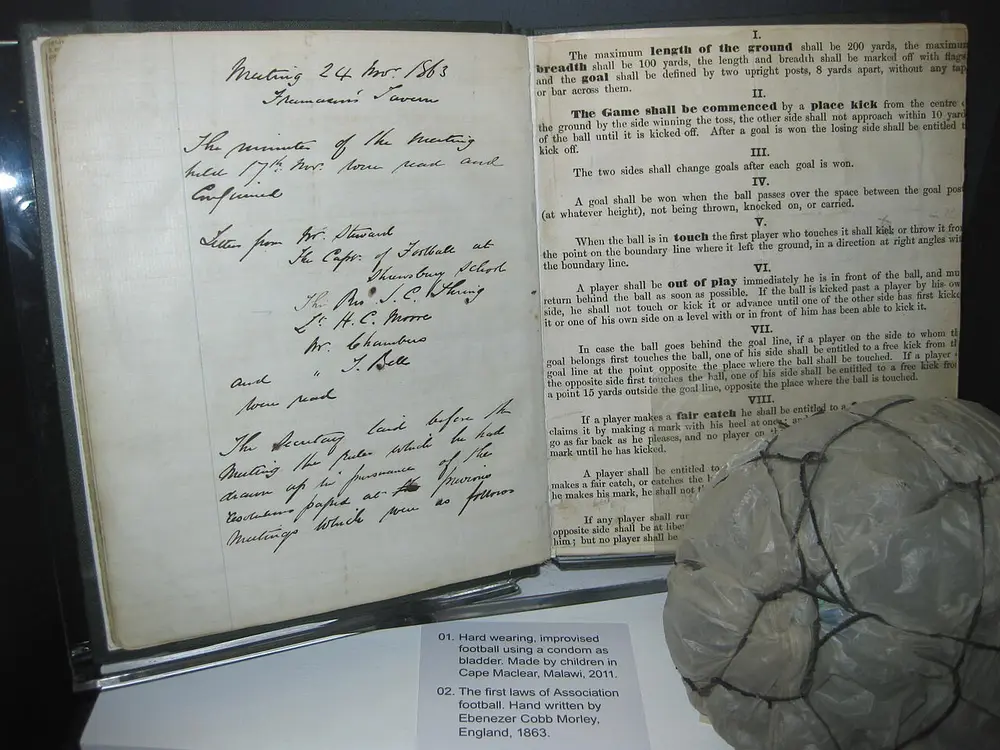

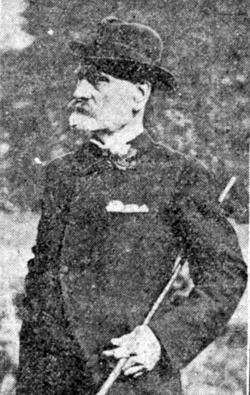

Morley, a solicitor from Hull, founded Barnes FC in 1862 and wrote to the newspaper Bell's Life suggesting a set of rules everyone could agree on. That letter led to the meeting where The FA was born.
- 1856The Cambridge Rules
Students at Cambridge University write down rules so that boys from different schools can play together. The oldest surviving copy dates from 1856.
- 1858The Sheffield Rules
Sheffield FC, founded in 1857 and now the oldest football club in the world, publishes its own rules. Ideas from Sheffield, such as the corner kick, later make it into the national Laws.
- 1863The FA and the first Laws
On 26 October, about a dozen London clubs meet at the Freemasons' Tavern in Great Queen Street and form The Football Association. On 8 December they approve 13 Laws. Hacking, kicking an opponent's shins, is left out.
- 1871The FA Cup
Charles Alcock, The FA's secretary, proposes a challenge cup. Wanderers beat Royal Engineers 1–0 in the first final, at Kennington Oval, in 1872.
- 1872The first international
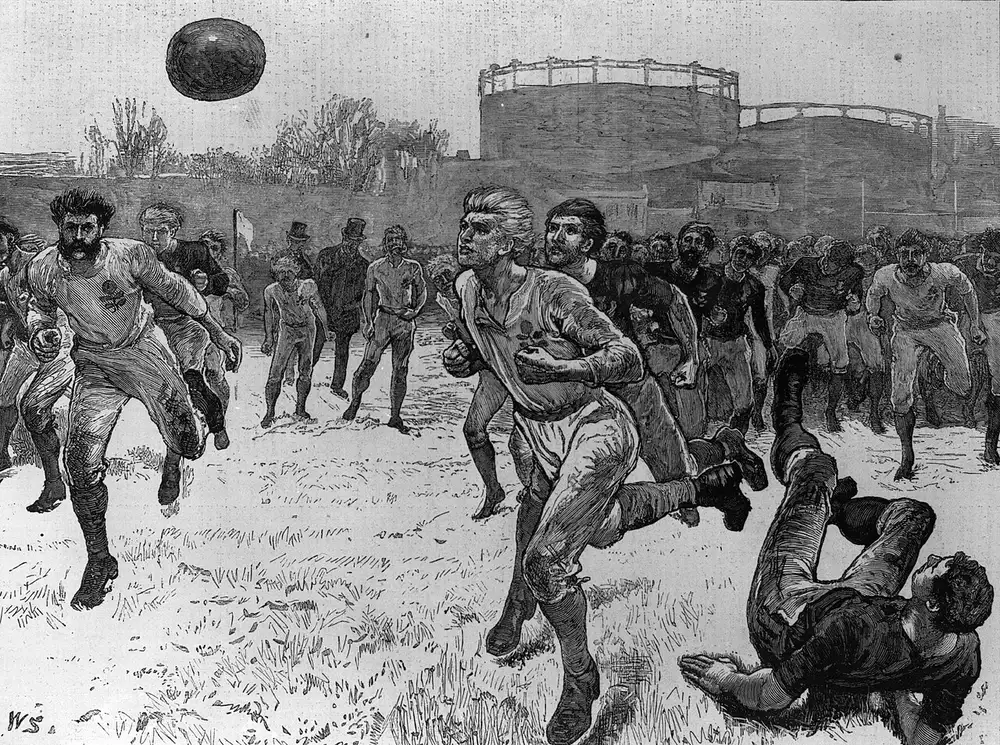
Scotland and England draw 0–0 at Hamilton Crescent in Glasgow on 30 November, the first official international match.
- 1886IFAB
The football associations of England, Scotland, Wales and Ireland form the International Football Association Board to look after the Laws. It still does, with FIFA, which joined in 1913.
- 1891The penalty kick
Proposed by the Irish Football Association, the penalty kick is added to the Laws. Goal nets arrive the same year, and the referee moves from the touchline onto the pitch.
- 1925Offside changes
An attacker now needs two opponents, not three, between them and the goal line to be onside. Goals go up straight away.
- 1938The 17 Laws
Stanley Rous, The FA's secretary and later FIFA president, rewrites the Laws into the 17 we still have today.
- 1970Yellow and red cards
Cards are used for the first time at a World Cup, in Mexico, so players and crowds who don't share a language can see a decision.
- 1992The back-pass rule
Goalkeepers may no longer pick up a ball deliberately kicked to them by a teammate. Wasting time by passing back to the keeper ends.
- 2018Video assistant referees
VAR is written into the Laws, for competitions that choose to use it.
- 2026This season
Five-second counts for slow throw-ins and goal kicks, retakes for accidental double touches at penalties, and the other changes listed above.

Dates from The FA's history of the game and IFAB. Images and their licences are listed on the licences page.